
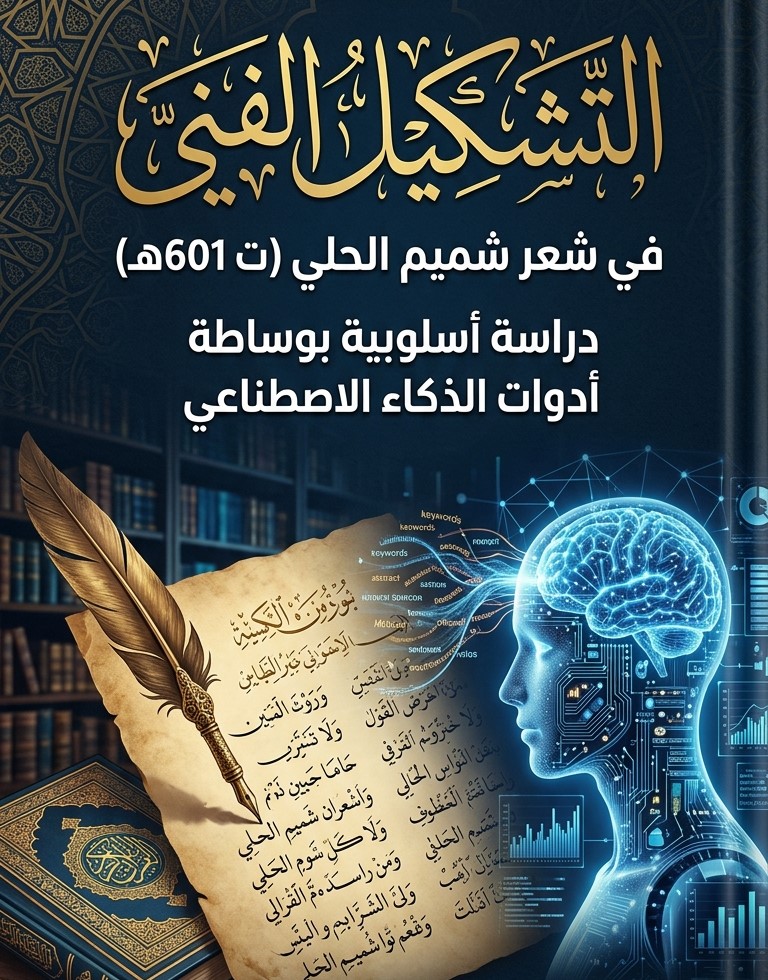
التشكيل الفني في شعر شميم الحلي (ت 601هـ) دراسة أسلوبية بوساطة أدوات الذكاء الاصطناعي

د.علاء عبدالخالق حسين المندلاوي
بحث علمي لموقع مؤسسة العراقة للثقافة والتنمية
بتاريخ25/ 8/ 2026
ملخص البحث:
تناول هذا البحث بالدراسة والتحليل التشكيل الفني في ديوان الشاعر علي بن الحسن بن عنتر الحلي المعروف بـ «شميم الحلي» (ت 601هـ)، مستهدفاً تفكيك خطابه الشعري عن طريق الموازنة بين التحليل البلاغي والأسلوبي والقراءة الحاسوبية المعاصرة. وتكمن أهمية البحث في كشف الخصائص البنائية لديوان شاعر اتسم بالولع النحوي والتقعر المعجمي، وإبراز أثر بنيته النفسية ونرجسيته الفكرية في اختيار مفرداته وتشكيل صورته البيانية وصنعته البديعية، فضلاً عن تقديم نموذج تطبيقي لتوظيف تقنيات الذكاء الاصطناعي والمعالجة الرقمية للنصوص في استقراء الظواهر الأسلوبية في التراث العربي القديم.
واعتمد البحث على المنهج الأسلوبي التحليلي المدمج بالأسلوبية الإحصائية الحاسوبية، وتضمنت إجراءات البحث إخضاع نصوص الديوان لرصد استقصائي إحصائي استهدف استخراج تواتر المفردات غريبة الألفاظ، وتفكيك العلاقات البيانية، وإحصاء المحسنات البديعية اللفظية والمعنوية، إضافة إلى تحليل المعمار الإيقاعي بنوعيه الداخلي والخارجي عبر تطبيقات المعالجة الآلية للنصوص.
وأسفر البحث عن جملة من النتائج؛ أبرزها وجود تلازم وثيق بين النرجسية الذاتية للشاعر ولجوئه المقوى للتقعر المعجمي وصياغة الصور البيانية المركبة كوسيلة لإثبات تفوقه الأدبي، وهيمنة التصنيع البديعي الملتزم (كالطباق والجناس ولزوم ما لا يلزم والتصدير) لتكون ركائز معمارية ناظمة للقصيدة، بجانب تفضيله الأبنية العروضية الفخمة والقوافي المجهورة ذات الرنين الصوتي العالي. وفي ضوء هذه النتائج، أوصى الباحث بضرورة توسيع استعمال المناهج الرقمية والذكاء الاصطناعي في دراسة نتاجات شعراء العصر العباسي المتأخر، وتطوير خوارزميات لسانية متخصصة لرصد البديع والمجازات المعقدة، وبناء بنوك معطيات حاسوبية تدعم المقارنات المعجمية والإيقاعية للنصوص التراثية.
الكلمات المفتاحية: شميم الحلي، التشكيل الفني، الأسلوبية الحاسوبية، المعجم الشعري، الصنعة البديعية، البناء الإيقاعي.
The Artistic Structure in the Diwan of Shamim Al-Hilli: A Computational Stylistic Study
Author: Dr. Alaa Abdulkhaleq Hussein Al-Mandalawi
Publication: Scientific Article for Al-Araqa Foundation for Culture and Development
Abstract:
This study examines and analyzes the artistic structure in the Diwan of the poet Ali ibn al-Hasan ibn Antar al-Hilli, known as “Shamim Al-Hilli” (d. 601 AH), aiming to deconstruct his poetic discourse through a comparative approach that balances traditional rhetorical and stylistic analysis with contemporary computational readings. The significance of this research lies in uncovering the structural characteristics of the Diwan of a poet characterized by grammatical obsession and lexical affectation, highlighting the impact of his psychological makeup and intellectual narcissism on his vocabulary selection, imagery construction, and rhetorical embellishments. Furthermore, it offers an applied model for utilizing artificial intelligence techniques and digital text processing to investigate stylistic phenomena in ancient Arabic heritage.
The research adopts an analytical stylistic approach integrated with computational statistical stylistics. The research procedures involved subjecting the texts of the Diwan to a comprehensive statistical survey aimed at extracting the frequency of archaic vocabulary, deconstructing rhetorical relationships, and measuring verbal and semantic rhetorical devices. Additionally, it analyzed the rhythmic architecture—both internal and external—using automated text processing applications.
The study yielded several key results, most notably a tight nexus between the poet’s self-narcissism and his intentional resort to lexical affectation and complex imagery as a means to assert his literary superiority. It also revealed a dominance of constrained rhetorical craftsmanship—such as antithesis, paronomasia, adherence to the unrequired (Luzum Ma La Yalzam), and antimetabole (Tasdir)—as organizing architectural pillars of the poem, alongside his preference for grand metrical structures and voiced rhymes with high acoustic resonance. In light of these findings, the researcher recommends expanding the implementation of digital methods and artificial intelligence in studying the works of late Abbasid poets, developing specialized linguistic algorithms to detect complex rhetorical and metaphorical devices, and building computational databases to support lexical and rhythmic comparisons of classical heritage texts.
Keywords: Shamim Al-Hilli, Artistic Structure, Computational Stylistics, Poetic Lexicon, Rhetorical Craftsmanship, Rhythmic Architecture.
التشكيل الفني في شعر شميم الحلي (ت 601هـ) دراسة أسلوبية بوساطة أدوات الذكاء الاصطناعي
